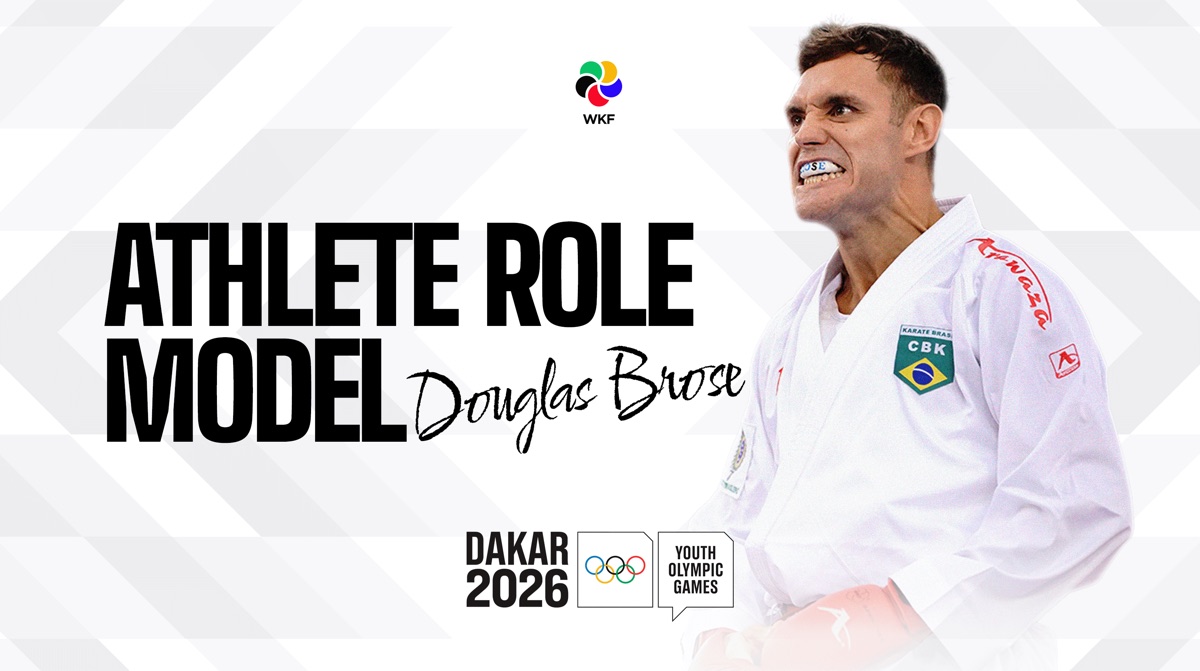
The IOC made a move in late April that did not get a lot of attention in mainstream karate coverage. They named Douglas Brose as one of 31 Athlete Role Models for the Dakar 2026 Youth Olympic Games. Brazil’s three-time world champion, an established member of the WKF Athletes’ Commission, will be on the ground in Senegal this October mentoring young athletes from across the Olympic movement.
That’s the news. Here’s why it’s bigger than it looks.
Karate’s Olympic situation is, frankly, awkward
After making its Olympic debut at Tokyo 2020, karate was dropped from Paris 2024. It’s also not on the LA 2028 programme. The sport is still on the Youth Olympic Games roster, which gives it an Olympic foothold, but the senior Olympic future remains uncertain. Every official IOC recognition of karate, in any form, matters in that context.
Brose’s appointment is one of those recognitions. He’s now formally an IOC-designated Athlete Role Model, which puts karate on the same shortlist as judo (Clarisse Agbegnenou of France), taekwondo (Ruth Gbagbi of Ivory Coast), and skateboarding (Rayssa Leal of Brazil). The 31-name list spans every sport at Dakar 2026 and represents Olympic credibility currency, the kind of soft signal that matters when sports lobby for inclusion in future programmes.
Brose was always going to be on this list
Three World Championship golds in men’s -60 kg kumite (2010, 2014, 2021). Gold at the 2009 World Games in Taiwan. Pan American Games gold in 2015. Seven Pan American Championship titles. Multiple re-elections to the WKF Athletes’ Commission. Founder of the Douglas Brose Institute for Children, which uses karate to support kids from socially excluded communities in Brazil.
If you asked anyone in international karate over the last fifteen years to name the most accomplished men’s kumite athlete in the sport’s modern era, Brose is the answer. He’s also, by all accounts, one of the most thoughtful spokespeople the sport has. That’s a rare combination.
What he’ll actually do in Dakar
Role Models on site provide mentorship, workshop training, and educational sessions for the young athletes. Topics include career management, injury prevention, mental preparation, and life beyond sport. They also attend training sessions, support athletes during competition, and participate in victory ceremonies.
It’s the kind of programme that does not generate headlines but creates the structural mentorship pathways that elite youth athletes rely on. For karate, having Brose visible in that role across two weeks of global Olympic coverage is unambiguously good for the sport.
The quote that’s getting shared
Brose’s own framing of the role was direct: “I did not build my career only to win medals. I built it to open paths.”
It’s the kind of line that lands precisely because Brose has the receipts. When a three-time world champion talks about building paths for others, you take it differently than when an inspirational poster says the same thing.
What to watch for
Dakar 2026 runs from October 31 to November 13, the first Olympic event ever held on African soil. Around 2,700 young athletes aged 17 and under will compete across three host zones: Dakar, Diamniadio, and Saly. Karate will be on the programme across categories, and Brose will be visible throughout the event. Expect to see him in coaching boxes, on social media, and likely in some on-mat moments with younger athletes.
If you’ve been tracking karate’s broader Olympic narrative, this is a checkpoint worth noting. The sport is fighting its way back into the senior Olympic conversation. Quiet wins like this one are part of how that fight gets won.
Sources: International Olympic Committee press release (20 April 2026), World Karate Federation, insidethegames.biz, Wikipedia. Photo: WKF.